
Improving access to recycling services in Ranua
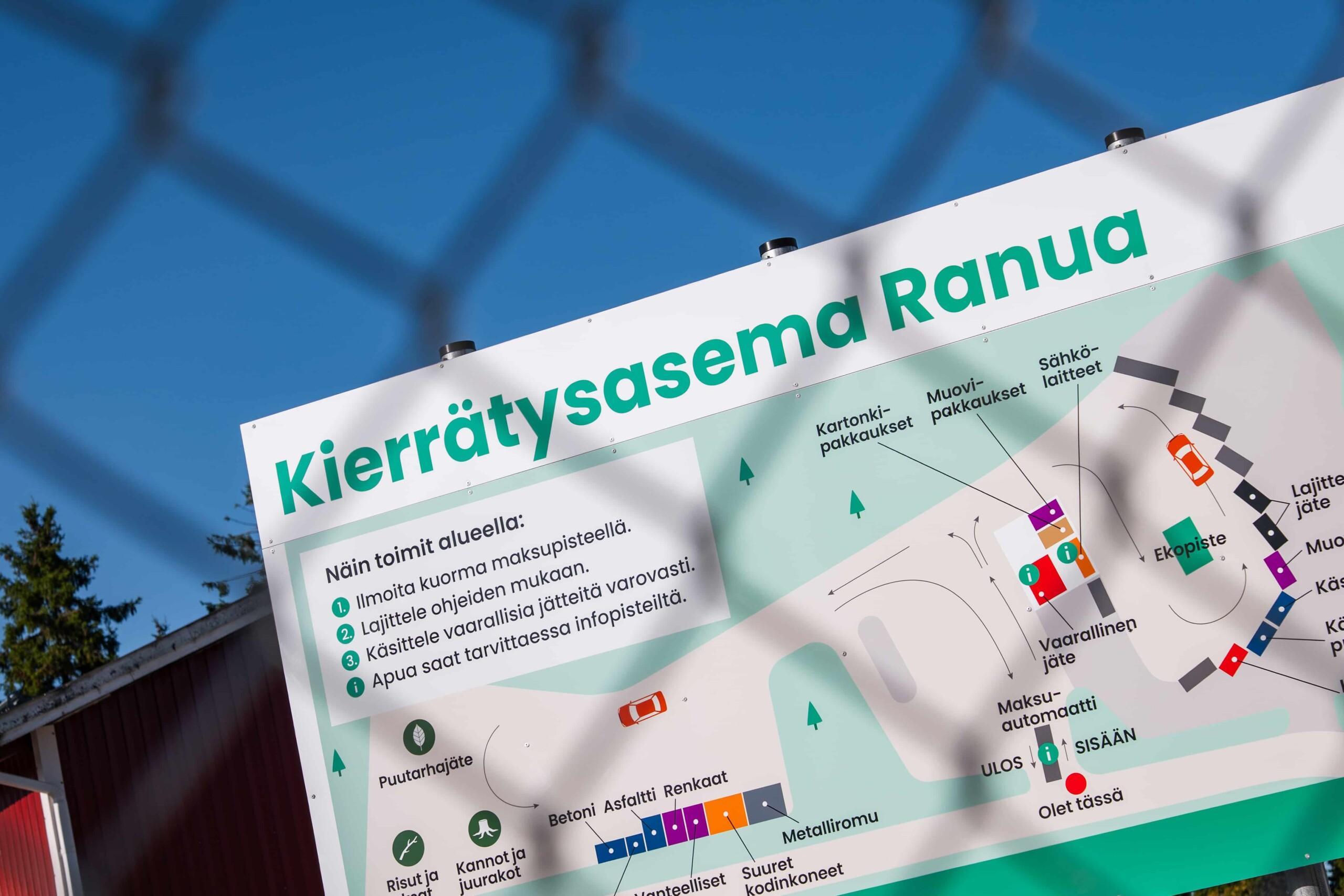
Napapiirin Residuum joined forces with Veloop to improve the accessibility and service standards of recycling stations. The collaboration also generated new ideas for the wider development of operations.
Operating across three municipalities is business as usual for the local waste management company, Napapiirin Residuum. They identified a need to improve the range of services and accessibility for domestic customers at the recycling centres in Pello and Ranua.
– The challenge has always been the opening hours of the stations and how to keep them open for longer in a cost-effective way. Previously, for example, our recycling centre in Ranua was only open a few days a week, and we now wanted to improve that, says Tuomas Rytilahti, Development and Quality Engineer at Residuum, summarising the crux of the problem.
The use of self-service stations has increased in the waste management sector, and Residuum also wished to explore this option. When identifying potential partners, Veloop stood out, particularly thanks to the monitoring service it offers. Its comprehensive knowledge and experience of waste management and construction projects were also seen as an advantage.
– They also had good references from our neighbouring plots, so to speak, and had worked with both large and small players in the sector.

Solutions for the future through cooperation
Cooperation to develop recycling centres was launched through a definition phase. Right from the outset, it was decided to broaden the scope to cover the development of the organisation’s operations as a whole, rather than focusing on a single recycling centre. The aim of the definition phase was to establish a shared understanding of the direction of development and the direction in which current operations should be developed.
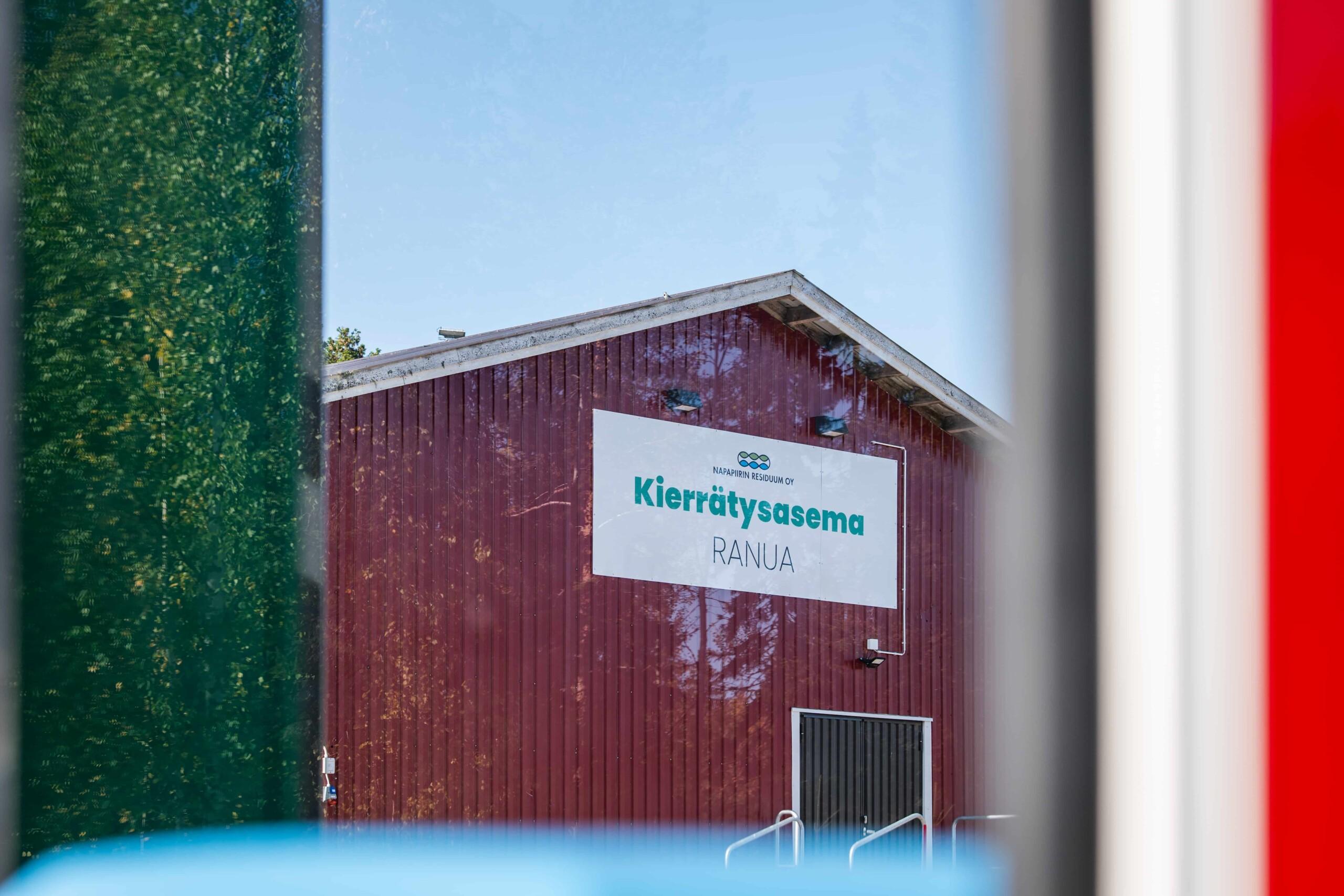
The refurbishment of the Ranua recycling centre took shape during the specification phase, and it was decided to convert it into a self-service centre, making use of the existing infrastructure. Veloop had previous experience of this kind of refurbishment, and Residuum also placed its trust in this experience, even though adapting the old infrastructure presented an immediate challenge.
– When the old infrastructure was being upgraded, we had to take the whole system into account in a different way than when building something new. From our point of view, however, the project went really smoothly, says Rytilahti.
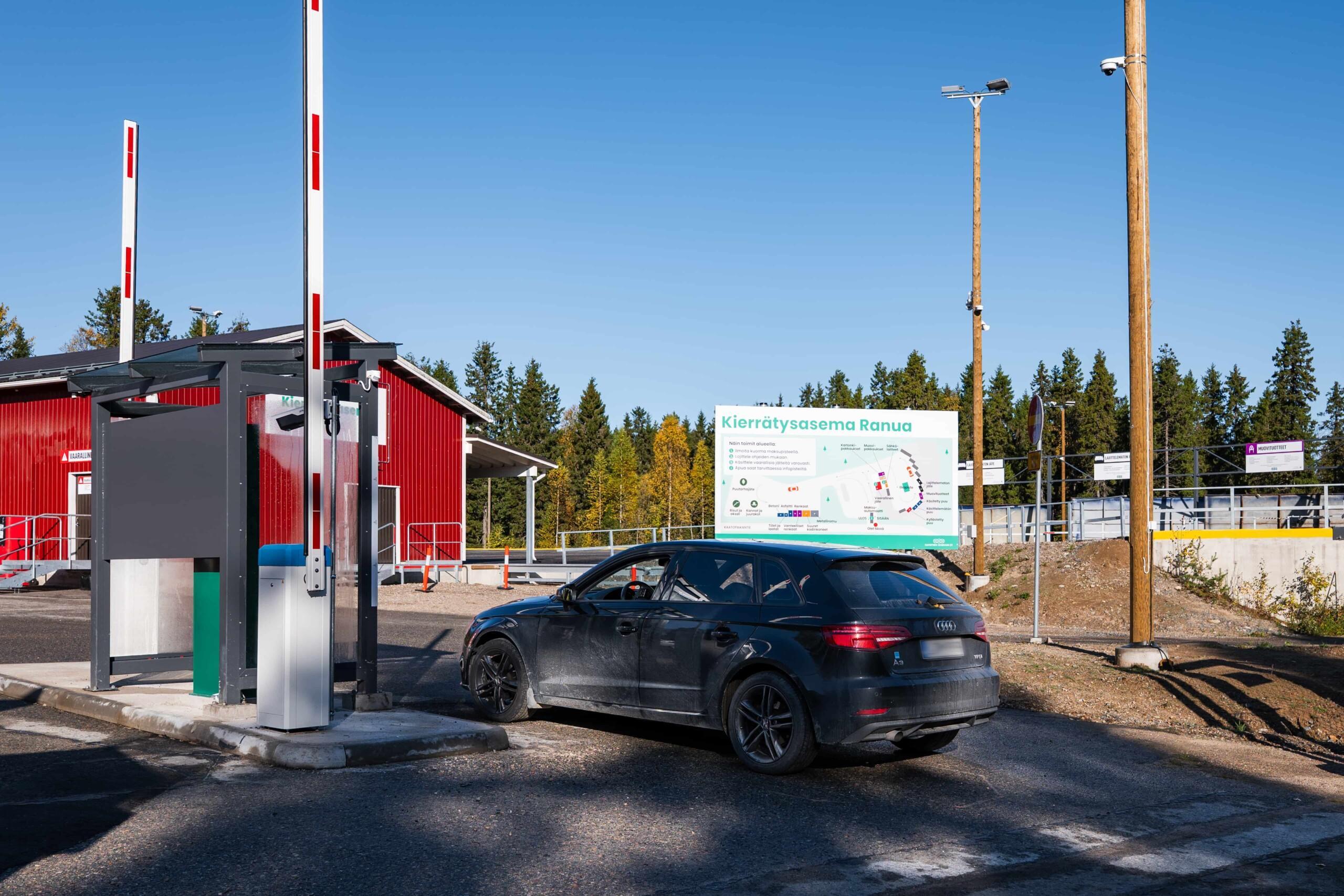
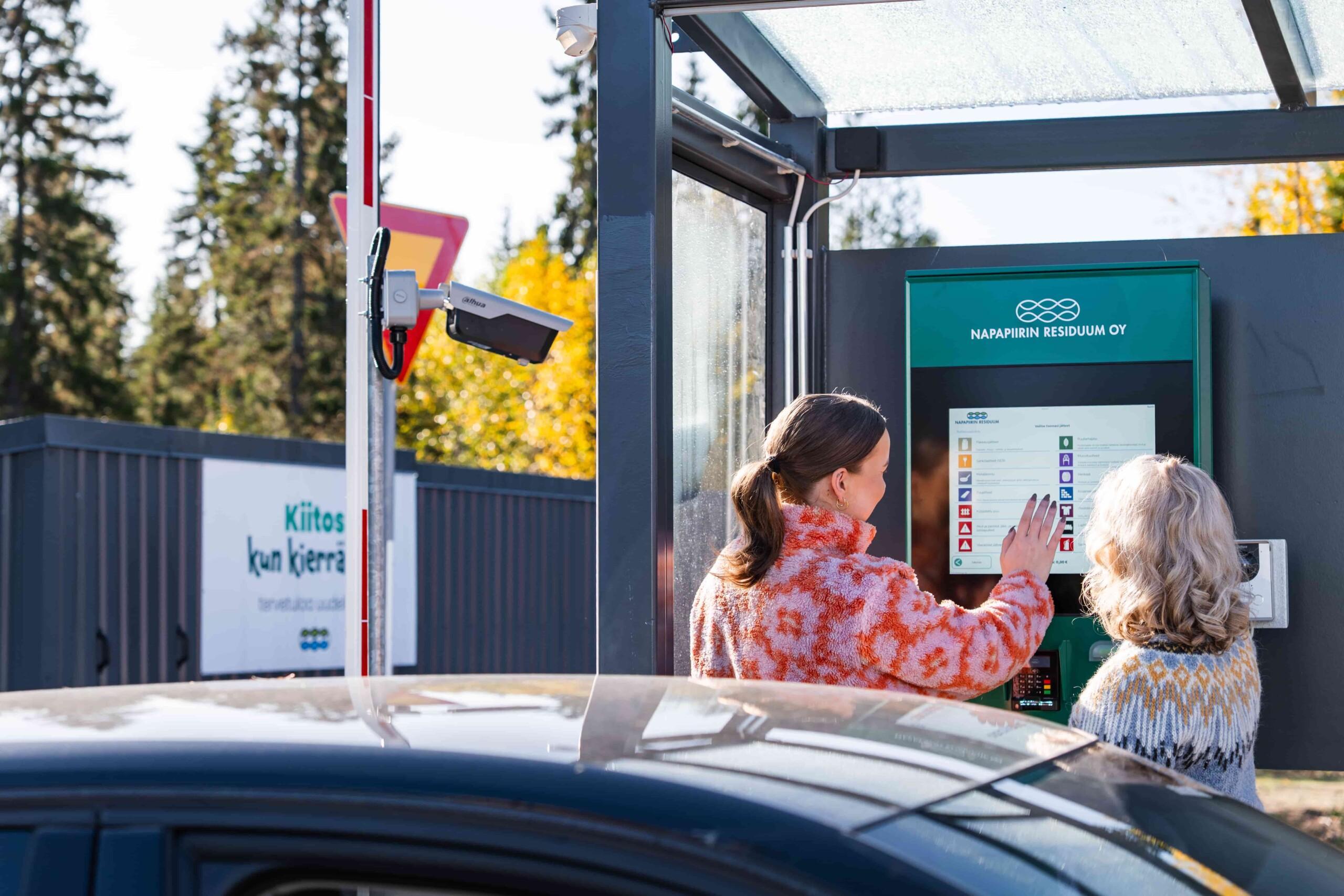
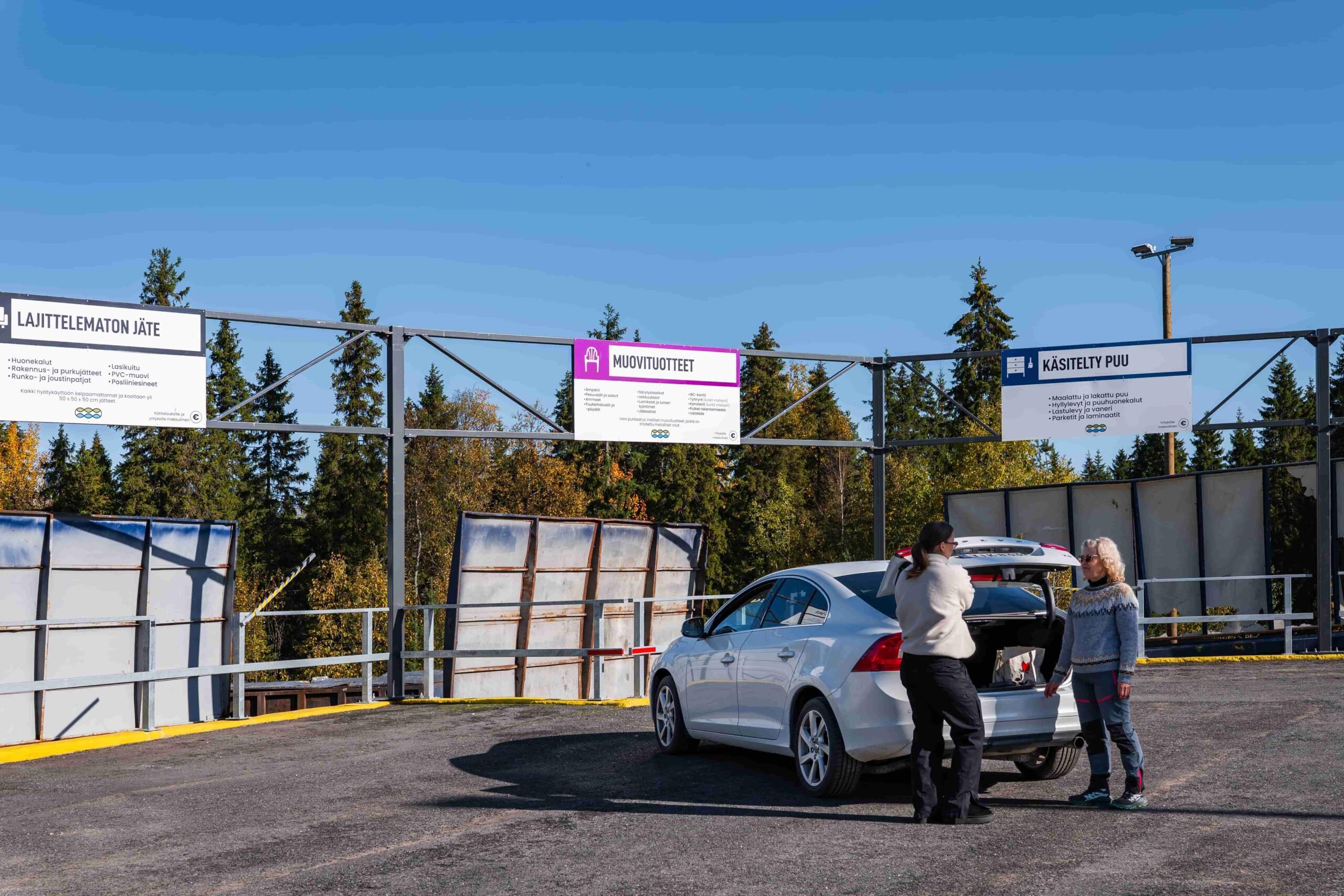
Converting the old recycling centre into a self-service centre by making use of the existing infrastructure and structures meant, in practice, that new technology was installed on the site.
– For example, cameras, loudspeakers, barriers and a service gate were installed on site, and significant improvements were made, in particular, to the signage in the area. Steel structures for signs were installed at the parking bays, and further signage was added to help customers find their way around the area. Furthermore, there had previously been no area lighting, and this was also implemented as part of the refurbishment, Jarkko Saaranen, Veloop’s construction project manager, explains.
Revitalising the old also meant that Residuum played an active part in the project’s progress.
“In principle, we’re already realising savings simply because we have this comprehensive knowledge in the background, which enables scalability both now and in the future.”
– Veloop gave us the freedom to come up with our own solutions and make our own decisions, and in a way, to move forward in line with them. They understood why we do certain things differently. Even though our perspectives sometimes differed, they always supported us in our decision-making.
Flexibility and the back-and-forth exchange of ideas were, in fact, aspects that were emphasised in the project and which, according to Rytilahti, made collaboration really easy. The project also highlighted internal collaboration within Residuum’s own organisation.
Veloop demonstrated an ability to assess how the various solutions would interact with one another. Furthermore, the integration and system requirements proposed by Veloop were clearly justified. All of this was seen to have a direct impact on the overall cost of the project.
– In principle, we’re already realising savings simply because we have this comprehensive knowledge in the background, which enables scalability both now and in the future.
During the specification phase, many ideas and perspectives emerged regarding the comprehensive development of Residuum’s operations.
– They came up with the idea: what if there were another station in Rovaniemi? We hadn’t even considered the possibility before, Rytilahti explains.
A smoother experience for all local residents
At the time of the interview, Ranua’s refurbished recycling centre was still in the final stages of completion, which is why Residuum had not yet had the opportunity to experience, in concrete terms, the changes brought about by the refurbishment in terms of the customer experience. Rytilahti, however, was hopeful that local residents would appreciate the improved standard of service it would enable.
– We hope that customers will appreciate the simplicity we’ve strived to achieve with the station. Together with Veloop, we’ve put a lot of effort into making the station as straightforward as possible. For us, however, the most important thing is that customers find using the station a pleasant, easy and safe experience.
At Napapiirin Residuum, the initial plan is to assess how well the self-service concept works in Ranua, and if it is deemed successful, changes may well be on the cards elsewhere within other operating area as well.
– In future, we will certainly be able to draw on the Ranua project, particularly in terms of service processes and technical solutions. Whilst some of the infrastructure solutions have been tailored specifically to the Ranua project, there are at least details and fundamental solutions there that can be and apply it to future projects as well, concludes Saaranen of Veloop.
Fact:
The project in a nutshell
Napapiirin Residuum is a municipal waste management company that provides waste management services in the municipalities of Rovaniemi, Ranua and Pello.
The aim was to improve the accessibility, service standards and opening hours of the Ranua recycling centre in a cost-effective manner.
The existing recycling centre was converted into a self-service centre, making use of the existing infrastructure.
Veloop was responsible for supporting the overall design and technical solutions in close collaboration with Napapiirin Residuum.


